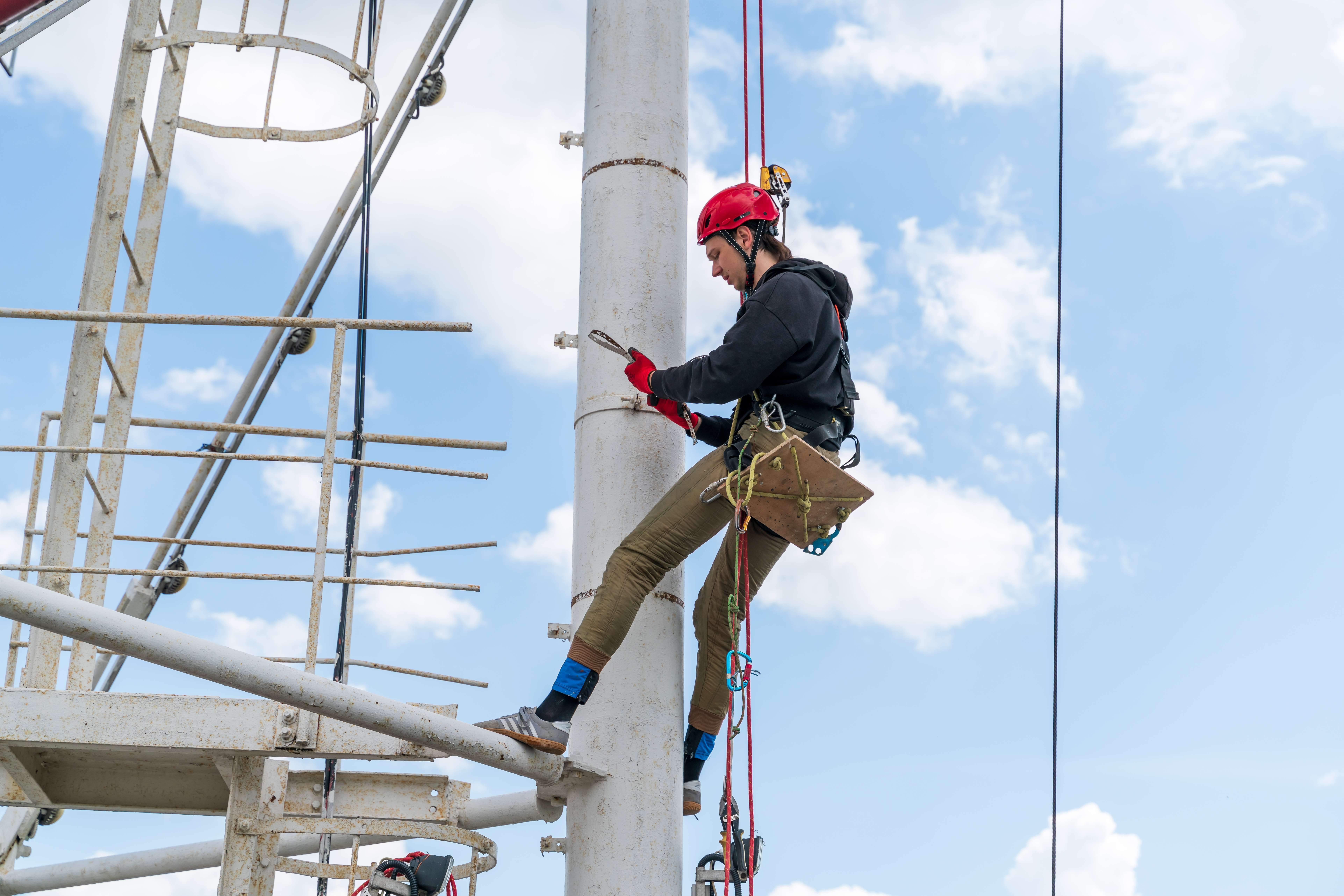


Work at height is not static. Equipment evolves, guidance changes, and case law develops. Yet many teams still rely on training completed several years ago, delivered under older standards and different site conditions.

Refresher training closes that gap and reinforces core principles such as risk assessment, hierarchy of controls, and correct use of collective protection. More importantly, it corrects drift. Over time, even experienced workers develop shortcuts. A platform is moved without full inspection, or a guard rail is removed and not replaced. A harness might be worn but not clipped on correctly because the task will ‘only take a minute’.
Training brings those bad habits back into focus. It resets expectations and reminds teams that work at height remains one of the leading causes of fatal injury in the UK.
Standards And Guidance Do Change
The Work at Height Regulations 2005 remain the legal foundation, but supporting guidance, industry standards, company policy, and enforcement priorities are updated regularly. Best practice in edge protection, mobile access towers and other work at height equipment continues to develop as HSE publications evolve.
Refresher training ensures your team understands current expectations. It clarifies inspection regimes and reinforces the need for documented planning. It addresses emerging risk patterns seen in recent prosecutions.
Directors and site managers must also understand their responsibilities. Section 37 of the Health and Safety at Work Act 1974 makes senior individuals accountable where consent, neglect, or connivance is proven. Updated training helps leadership recognise where liability may arise and how to prevent it.
Reinforcing Practical Skills
Knowledge alone is not enough. Competence requires application. A structured top-up session should revisit equipment checks, safe ladder positioning, tower assembly protocols, and guard rail installation standards. It should cover exclusion zones, safe access routes, and the difference between collective protection and personal fall arrest.
Knowledge of real case studies can strengthen everyone’s understanding of the situation. When teams see how a minor oversight led to prosecution or serious injury, the message becomes much more tangible. This approach shifts training from theory to practical decision-making on site.
Workers should leave refresher sessions confident, clear about expectations, and prepared to challenge unsafe instructions.
Building A Safety Culture That Holds
Training is not an exercise in ticking boxes. It is a clear signal that safety is paramount. When employers invest in regular refreshers, they demonstrate that safety standards are an active part of the daily routine.
That investment influences behaviour. Supervisors enforce rules more consistently when they know standards have been refreshed. Operatives feel supported when procedures are explained rather than imposed. Near misses are more likely to be reported because teams understand their value in preventing future harm.
Over time, refresher training reduces complacency. It embeds the idea that safe systems of work are reviewed, discussed, and improved. This culture protects not only workers at height but the organisation itself. In the event of HSE scrutiny, documented refresher training shows proactive management rather than reactive correction.
If your team has not revisited work at height training recently, 2026 is the right time to act. Contact Ability International to arrange structured refresher training aligned with current UK guidance and enforcement expectations.
Image Source: Envato

What Are the Benefits of Online Work-At-Height Training In 2026?
The Importance of Edge Protection in Fall Prevention