


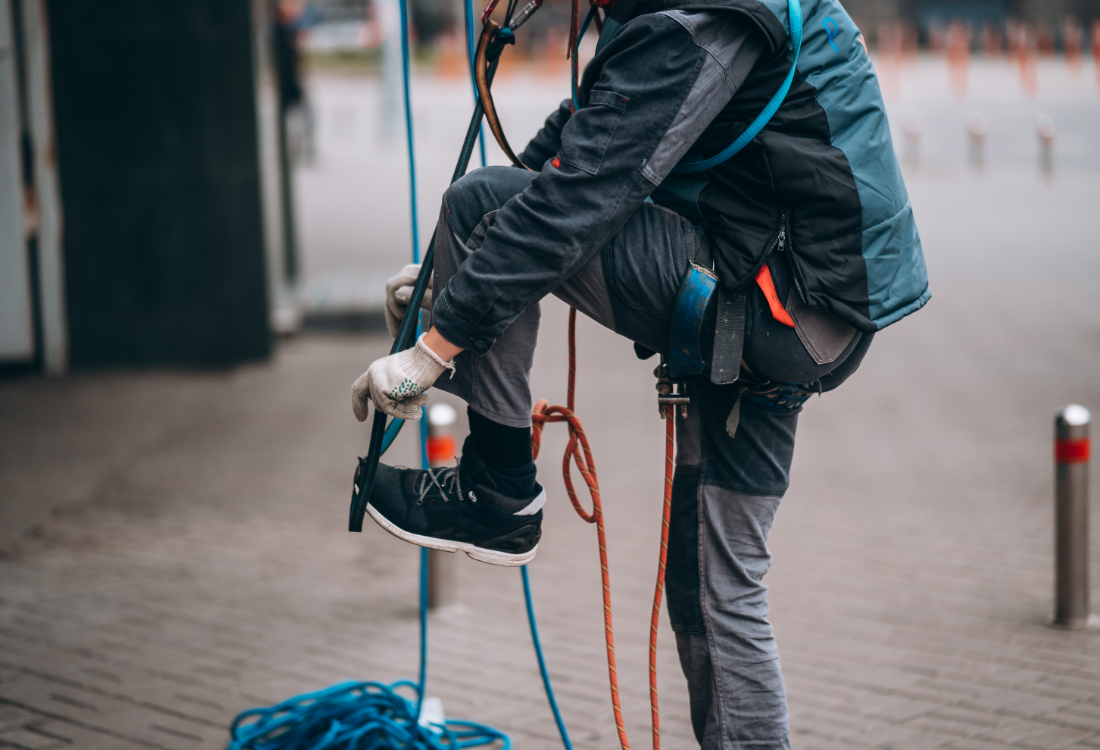
Every year falls from height remain the biggest cause of death and serious injury in British workplaces. The Health and Safety Executive (HSE) continues to warn employers that even small falls can have devastating consequences.
It is easy to assume that a short distance from the ground is safe, but the reality is more demanding, as a fall of any height can change a person’s life forever. In fact, many of the worst injuries occur not because someone was working high above the ground, but because they trusted a step, platform or surface that was never designed to take their weight. The most dangerous assumption a worker can make is that a low height equals low risk.

Here, we look at the varying fall distances and the potential consequences for each. These examples are based on the types of incidents that appear repeatedly in HSE reports and legal cases. They serve as a reminder that risk does not begin at six feet. It begins the moment a worker’s feet are not firmly on the ground.
One To Two Feet
Injuries at this height often involve sprains, broken wrists and fractured arms from trying to break the fall. Injuries like a twisted ankle or sprained wrist may not be fatal, but they can lead to extended time away from work and even long rehabilitation periods that take a toll on confidence and mobility.
Many employers underestimate how frequently these incidents occur. A missing step, uneven slab or wet surface can send someone off balance. Small access points, temporary platforms or improvised stepping surfaces create real hazards. If a worker loses balance because they were required to climb onto makeshift access equipment, the employer may still be held liable. Courts often consider whether the worker had a safer alternative. When none was provided, responsibility is clear.
Three To Four Feet
Falls from three to four feet obviously introduce a greater level of danger. The extra distance increases the force of impact, which significantly raises the chance of broken bones and head injuries. These are the kinds of falls that regularly appear in accident summaries from warehouses, construction sites and maintenance roles.
At this height, concussion becomes a common and serious outcome because the head often strikes the ground or nearby structures. A concussion can take months to resolve, and symptoms such as dizziness, memory gaps and headaches may linger. This creates ongoing challenges not only for the injured worker, but for their family and employer. Some do not fully return to their previous role, and others require long phased returns or adjustments to their duties.
Five To Six Feet
Falls from five to six feet are often life changing and can be fatal. Impact at this height can break multiple bones, cause internal injuries and lead to severe brain trauma. Even when a person survives, recovery can require surgery, extended hospital stays and long periods of physiotherapy. The emotional strain on the injured worker and their family can be significant, particularly when recovery stalls or permanent damage becomes clear.
These heights often feature in HSE prosecutions. Workers have fallen from similar distances while repairing roofs, checking gutters or cleaning plant equipment without any edge protection in place. In several cases, company directors received large fines after investigators found that the work was never planned, supervised or properly risk assessed.
These outcomes emphasise a point that repeats across the construction industry. Falls from this height are predictable, preventable and should not occur when employers meet their legal obligations.
Six Feet And Above
A fall from six feet or higher carries a strong likelihood of serious or fatal injury. At this height, the force of impact can destroy internal organs and cause immediate traumatic brain injury. Survivors may face permanent disabilities, including paralysis, loss of mobility or significant cognitive impairment.
These incidents are entirely preventable. There is no situation in which a fall of this scale should occur if the correct measures are in place. Edge protection, guard rails and fall arrest systems must be standard practice. Workers at these heights should never be asked to rely on balance alone. Proper supervision, clear signage and a planned safe route should always accompany the physical controls.
The Human And Legal Cost
Each fall affects not only the worker but also their family, colleagues and employer. A single missing barrier can change the course of a person’s life. Employers have a legal duty to ensure that anyone working at height is properly protected, regardless of the distance involved. A fall from one foot or twenty feet can lead to prosecution if caused by inadequate planning or missing protections. Financial penalties can be substantial, but the human cost is greater. It shapes families, careers and communities.
A responsible employer does not judge risk by height. They judge it by the likelihood of harm and the quality of protection in place. When workers step onto platforms, scaffolds or temporary access points, they trust that someone has taken their safety seriously. It is a trust that should be honoured every time.
To learn more about preventing falls from any height, visit Ability International for a rich resource of health and safety-related information and equipment.
Image Source: Canva
Share this
Falls From Height: How Can They Be Prevented?
Falls From Height: How Can They Be Prevented?
Aug 22, 2025, 11:42:01 AM
2
min read
Falls From Height Leading Cause Of Worker Death
Falls From Height Leading Cause Of Worker Death
Aug 22, 2025, 11:44:10 AM
2
min read
Falls From Height Lead Death Stats In 2025
Falls From Height Lead Death Stats In 2025
Dec 22, 2025, 9:30:00 AM
4
min read